Artist Builds Large Camera Obscura Chamber: Paper in Darkness, Single Lens, No Film or Sensor
Exploring time, motion, and consciousness through direct large-scale exposures — Maciej Markowicz
The Large Camera Obscura Chamber – My Direct Approach
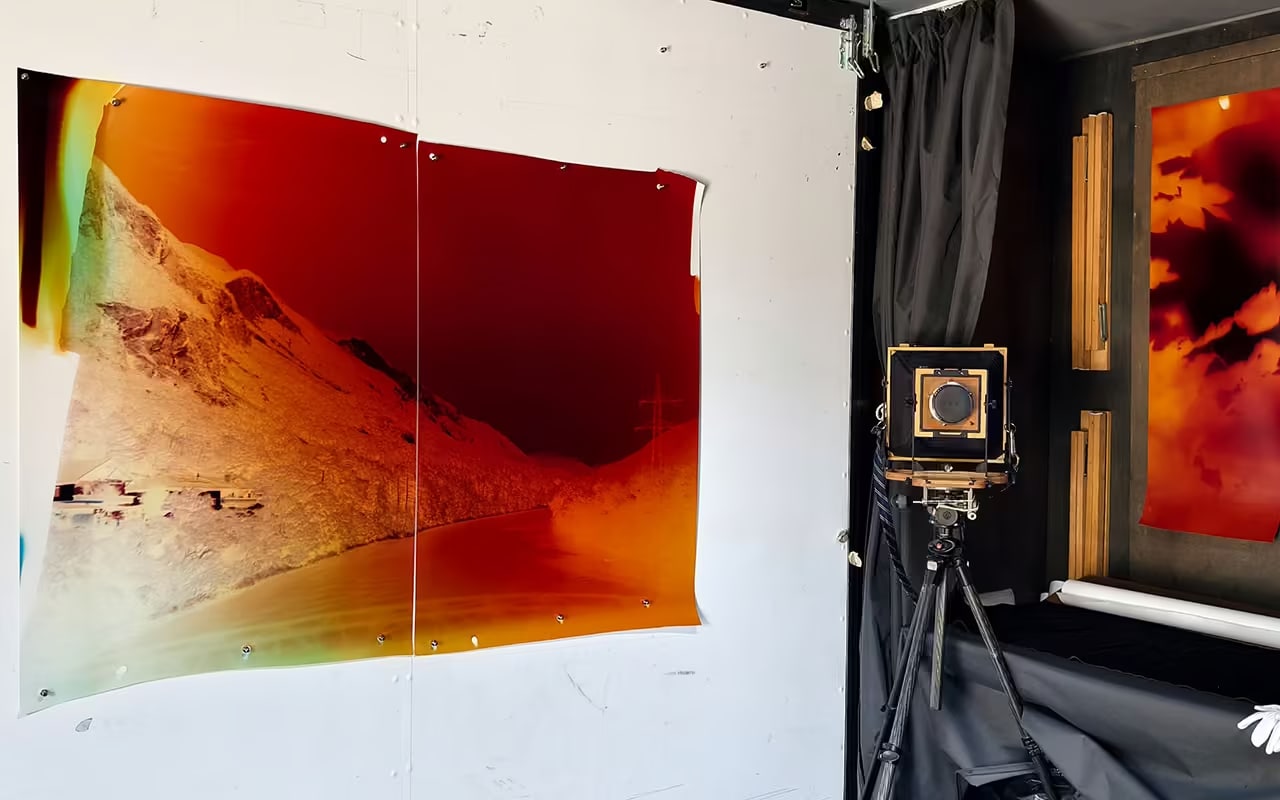
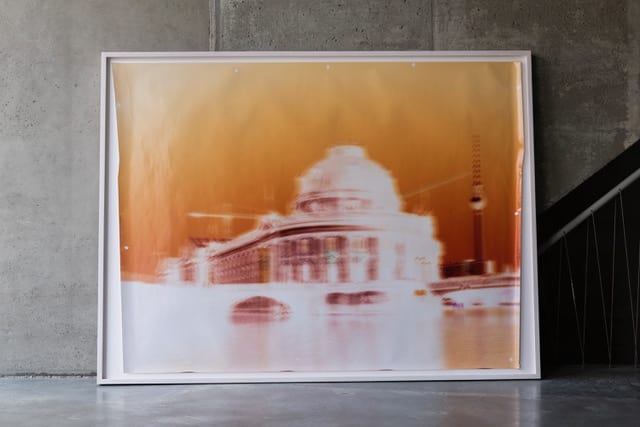
As an artist, I built large camera obscura chambers — mobile dark rooms where photographic paper is placed in total darkness. Light enters through a single lens, projecting an inverted image directly onto large-format chromogenic paper. No film. No digital sensor. No intermediary negative. The result is a one-of-a-kind print that captures 8 seconds (or more) of flowing reality as a frozen motiongraph.
Unlike stationary "next door" setups (where subject and paper chamber are separated by a wall and lens), my large chambers are mobilized: a boat on Berlin's waterways, a converted van for alpine roads, even container-based darkrooms. The entire structure becomes the camera obscura — a walk-in dark chamber that travels to the subject.
How the Large Camera Obscura Chamber Works – Step by Step
- Building the Large Chamber: I construct or convert vehicles and structures into sealed dark chambers (boat, van, container). Light-tight, with controlled access.
- Single Lens Placement: A precise lens (often large-format) is mounted as the only aperture — projecting the outside world inverted into the darkness.
- Paper in Darkness: In complete darkness inside the large chamber, I position sheets of color photographic paper (up to 127 × 204 cm / 50 × 80 in) where the projected image will fall.
- Direct Exposure – No Film, No Sensor: Exposure lasts ~8 seconds (or longer for motion). Photons hit silver halide crystals directly — no film intermediary, no digital capture.
- Chemical Development: The paper is processed as a chromogenic negative — yielding a unique, large-scale direct print that reveals time-embedded motion: blurs, traces, layers.
Why "Next Door" Inspiration Meets Mobile Evolution
Historical and contemporary "next door" camera obscura rooms (subject in one space, paper in adjacent dark chamber via lens) inspired me. I took that separation concept mobile — the large chamber itself travels, turning boats, vans, and containers into dynamic dark rooms for direct paper exposures. The result: photographs that are not just images, but experiences of time made visible.
Exhibitions & Recent Works
- Innsbruck Solo – April 2026: Large camera obscura chamber motiongraphs along the Inn River at INNSITU Gallery.
- Back to the Magic – 2025: VisuleX Gallery Hamburg, group exhibition with Thomas Kellner, Michael Nischke, and Marcus Schwier.
- Ongoing: Floating Spree boat chamber, alpine van expeditions, walking large-format obscura.
View Full Motiongraphs Collection
FAQ: Large Camera Obscura Chamber Process
What does "paper in darkness, no film or sensor" mean?
Photons from the outside world project directly onto chromogenic paper inside the dark chamber — no film strip, no digital sensor. Pure analog chemistry from light to finished print in a single step.
How large are the chambers and prints?
Chambers are vehicle-scale (boat, van, container) — large enough to work inside. Prints reach up to 127 × 204 cm (50 × 80 in). Each is unique and unrepeatable.
How long is the exposure?
Typically 8 seconds — long enough to capture the trace of motion (water, light, people moving) while retaining the structure of the scene. The 8-second duration is central to the motiongraph philosophy.
Where can I see the work in person?
The next exhibition is Above the River and Under the Sky at INNSITU Gallery, Innsbruck, opening . See all exhibitions here.